

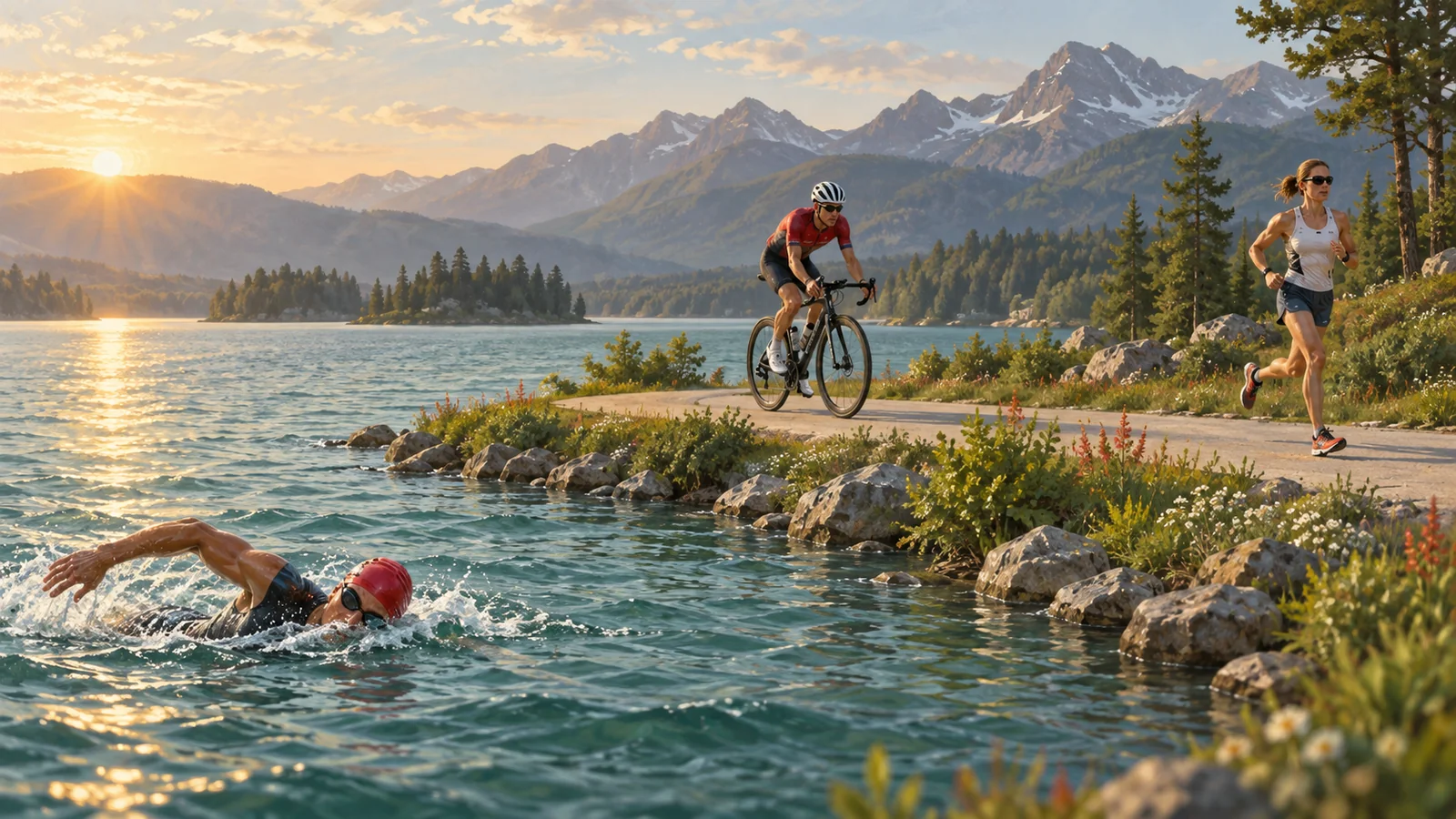
If you are picking your first event, the words can make the choice seem more complex than it is. Triathlon is the sport. An Ironman is one kind of triathlon. You do not have to cover 140.6 miles to become a triathlete.
For a first start, I would usually look at a local sprint. It gives you a chance to learn all three sports and the changes between them at shorter distances. A full Ironman can be a long-term goal. It also calls for a much larger place in your weekly life.
What is the difference between Ironman and triathlon?
A triathlon combines swimming, cycling, and running, normally in that order. The clock keeps going as you change sports. Those changes are called transitions: T1 takes you from the water to the bike, and T2 takes you from the bike to the run.
Triathlon distances vary. Sprint and Olympic events are common shorter races. Half-distance and full-distance events stretch the same three sports over a longer course.
IRONMAN is a race brand. Its full-distance series covers 140.6 miles, while IRONMAN 70.3 events cover 70.3 miles. Other organizers also stage long-distance triathlons. The distance alone does not make an event part of the IRONMAN brand.
Triathlon distances at a glance
The standard triathlon distances listed by USA Triathlon show how each format breaks down. The second figure in each cell is a rounded conversion.
| Format | Swim | Bike | Run |
|---|---|---|---|
| Sprint | 750 m 0.47 miles | 20 km 12.4 miles | 5 km 3.1 miles |
| Olympic | 1.5 km 0.93 miles | 40 km 24.9 miles | 10 km 6.2 miles |
| 70.3 / half | 1.2 miles 1.9 km | 56 miles 90 km | 13.1 miles 21.1 km |
| 140.6 / full | 2.4 miles 3.8 km | 112 miles 180 km | 26.2 miles 42.2 km |
The numbers 70.3 and 140.6 refer to total miles across all three legs. A half-distance event is about 113 km; a full-distance event is about 226 km. Always check the course details before you enter. Local sprint courses may differ, and weather can force changes to planned distances.
Sprint and Olympic distance: shorter races with room to grow
A sprint offers a shorter first outing, but the name does not mean you must go flat out. You can aim to complete it at a pace you can sustain. Super-sprint events offer another, shorter option where available.
The Olympic distance doubles each standard sprint leg. It makes sense if you want more time on the course while keeping the run to 10 km. Both formats also suit strong athletes who want to race fast. Shorter distances are not just for beginners.
Half and full Ironman distance: a longer day
An IRONMAN 70.3 ends with a half marathon after the swim and bike. A full Ironman ends with a marathon. That is why being able to complete each leg on its own is only part of the task.
You have to reach the last sport with enough energy to keep moving. The 70.3 can be a step toward the full distance, or an enjoyable focus in its own right. There is no need to keep moving up just because you can.
How does the training commitment change?
As triathlon distances increase, the longer sessions take up more of your week. You must also fit in travel to the pool, gear upkeep, food, sleep, and recovery. A two-hour ride can take more than two hours out of your day.
There is no single weekly total that makes everyone ready. Your starting fitness, skills, course, and goals all matter. Someone with years of cycling behind them has a different starting point from a person learning to ride in traffic.
Before you choose a plan, ask what a normal week can hold:
- Where can you swim on a regular basis?
- Which day has room for a longer ride?
- Can you practice running after cycling, often called a brick session?
- What room remains for rest, work, family, and friends?
For a first season, shorter races make sense when your schedule is tight. You can build a steady habit and learn where you need help. A coach or local club can help you choose training that fits your current skills. Motivation helps you start; a workable schedule helps you keep going.
Is an Ironman triathlon harder?
A full Ironman asks you to cover far more ground than a sprint or Olympic event. For the same athlete, that generally means a greater endurance demand and more time on the course. But effort also depends on pace, weather, hills, and your aim.
A hard sprint can feel intense from the opening swim. In a longer event, going too hard early can leave you struggling later. The useful question is how well you can hold an effort across the whole course.
For example, being a strong runner does not erase the effort spent cycling first. Think about the run as the last leg of one event. Practice how you will pace the earlier legs and use the food and drink you plan to bring.
Shorter distances let you work on those skills with less ground to cover. They still deserve careful preparation, especially if open water is new to you.
Costs, travel, and recovery deserve a place in the choice
The entry fee is only one line in the budget. Add transport, lodging, bike servicing, pool access, food, and any gear you need. A local sprint may let you sleep at home and drive a short way to the start. A destination event may involve several nights away.
You do not need to buy every upgrade at once. Start with equipment that fits, works well, and meets the event rules. A specialist triathlon bike is not automatically the best first purchase. Reliable brakes, a sound helmet, and comfort on the saddle have more immediate value than a costly wheelset.
Allow room after the finish, too. Avoid building your travel plans around the assumption that you will feel fresh. Recovery varies between people and events. An easy next day, help with bags, and flexible plans can make the trip more manageable.
Which event should you choose?
Start with the demands you can prepare for, then choose a course you want to spend time on. IRONMAN's race-selection guidance considers distance, course type, season, location, and support. Those factors are useful at every level of the sport.
- Pick a sprint if you want to learn the whole routine. A local event gives you a clear, shorter target. Find out whether its swim is in a pool, lake, river, or sea.
- Pick an Olympic event if you enjoy sustained effort but want a shorter run. You still get all three disciplines and plenty of scope to improve.
- Consider a 70.3 if you want to explore longer racing. Make sure the longer sessions fit your week before you commit.
- Consider the full distance if you want a major endurance challenge. Give the preparation, recovery, and people who support you a real place in the plan.
Course details can shape the choice as much as total mileage. A flat route and a hilly one can ask different things of you. Great scenery is a bonus, but check the road surface, likely weather, water conditions, and travel demands as well.
You can stay with sprint or Olympic events for years. Learning to pace better, handle the bike well, or complete a smoother transition are worthwhile goals at any distance.
What to check before you enter
Read the event's current athlete guide. Check its swim setup, start procedure, required gear, and course cutoffs. The IRONMAN competition rules are also essential for its branded events. Wetsuit use, helmets, bike equipment, and drafting each have rules; do not assume every organizer uses the same ones.
A cutoff is a deadline, not an average finish time. There may be separate swim, bike, and intermediate checkpoints as well as an overall limit. Transitions and stops can count toward those limits. Look at the exact event guide rather than treating a time quoted elsewhere as a promise.
If you are new to open water, find a coached or supervised session before choosing an event that uses it. Pool fitness and comfort in a crowded lake are different skills. Build confidence in the setting you will face.
Common questions about triathlon distances
Can a beginner start with an Ironman?
There is no single answer for every beginner. A new triathlete with a strong endurance background starts in a different place from someone new to all three sports. My first choice would still be a shorter event. Even IRONMAN recommends short-course experience before a first 70.3 if you have never raced triathlon.
Is a half Ironman a triathlon?
Yes. A half-distance triathlon combines a 1.2-mile swim, 56-mile ride, and 13.1-mile run. IRONMAN 70.3 is the branded series at that distance. The word “half” describes the mileage, not half the need to prepare.
How many months do you need to prepare?
Count back from your current abilities, not just from the event date. You may need time to learn a skill before you begin a structured plan. Review that plan's starting requirements and peak weeks. If they do not fit, choose a later date or a shorter course.
Do you have to complete every distance in order?
No. Sprint, Olympic, 70.3, and full distance can form a useful progression, but they are not a compulsory ladder. Use shorter races to learn, and move up when you want to and can prepare well. The best event is one whose demands fit the life you can give it.